

Common Childhood Illnesses: Symptoms, Treatment, and When to Call the Doctor
Every parent's heart sinks when their child gets sick. Understanding common childhood illnesses helps you respond appropriately, know when to seek medical care, and feel more confident managing your child's health.

Understanding Fever
A fever is a temperature of 100.4°F or higher. It's not an illness itself but a symptom indicating the body is fighting infection. Rectal thermometers are most accurate for babies. Call immediately if a baby under 3 months has any fever of 100.4°F or higher, fever reaches 105°F at any age, fever comes with rash, severe headache, or stiff neck, fever accompanies difficulty breathing, fever lasts more than 5 days, the child is inconsolable or extremely lethargic, or there are signs of dehydration.
For home treatment, give acetaminophen or ibuprofen following dosing guidelines. Never give aspirin to children due to Reye's syndrome risk. Keep your child comfortable and lightly dressed, offer plenty of fluids, monitor for other symptoms, and use room temperature baths if needed. Remember, fever itself isn't dangerous—it's the body's natural defense mechanism.
Common Cold
The common cold brings runny or stuffy nose, sneezing, coughing, mild fever, sore throat, decreased appetite, and general fussiness. For home treatment, keep baby hydrated, use saline drops and gentle suction for congestion, run a humidifier in the room, slightly elevate the head of the crib by placing a towel under the mattress, and encourage rest. Never give cold medications to children under 4 years old.
Call your doctor if symptoms worsen after 7 days, fever lasts more than 3 days, breathing becomes difficult, signs of ear infection develop (ear pulling, drainage), or your child refuses to drink fluids.
Ear Infections
Ear infections cause ear pain (baby may pull at ear), fever, increased fussiness and crying, trouble sleeping, fluid draining from the ear, balance problems, and often follow a cold. Call the doctor for babies under 6 months with symptoms, severe pain, fever over 102.2°F, fluid draining from the ear, or symptoms lasting more than a day.
Home treatment includes pain reliever as recommended by your doctor, warm compress on the ear, keeping your child hydrated, elevating the head during sleep, and completing the full course of antibiotics if prescribed.
Stomach Flu
Gastroenteritis brings vomiting, diarrhea, stomach cramps, low-grade fever, decreased appetite, and potential dehydration. Signs of dehydration include dry mouth and tongue, no tears when crying, sunken soft spot, no wet diaper for 6+ hours, dark yellow urine, and lethargy or irritability.
Prevent dehydration by offering small, frequent sips of liquid. Use Pedialyte or electrolyte solution for babies and continue breastfeeding. Once vomiting stops, offer the BRAT diet (Bananas, Rice, Applesauce, Toast), avoid dairy temporarily, and increase diaper changes to prevent rash.
Call your doctor for signs of severe dehydration, blood in stool or vomit, vomiting lasting more than 24 hours, severe abdominal pain, fever over 101°F with diarrhea, or if baby is under 3 months old.
Other Common Conditions
Croup causes a distinctive barking cough like a seal, hoarse voice, difficulty breathing, harsh sound when inhaling (stridor), and symptoms often worse at night with low fever. For home treatment, take your child outside in cool night air, create steam in the bathroom from a hot shower, use a cool mist humidifier, keep your child calm as crying worsens symptoms, and offer fluids. Call the doctor for difficulty breathing, blue lips or fingernails, drooling or difficulty swallowing, high fever, or stridor at rest.
Hand, foot, and mouth disease brings fever, sore throat, painful mouth sores, rash on hands, feet, and sometimes buttocks, decreased appetite, and irritability. Treat with pain reliever for fever and discomfort, cold foods like popsicles and yogurt, avoiding acidic foods, maintaining hydration, and keeping home until fever-free for 24 hours.
Building Your Medicine Cabinet
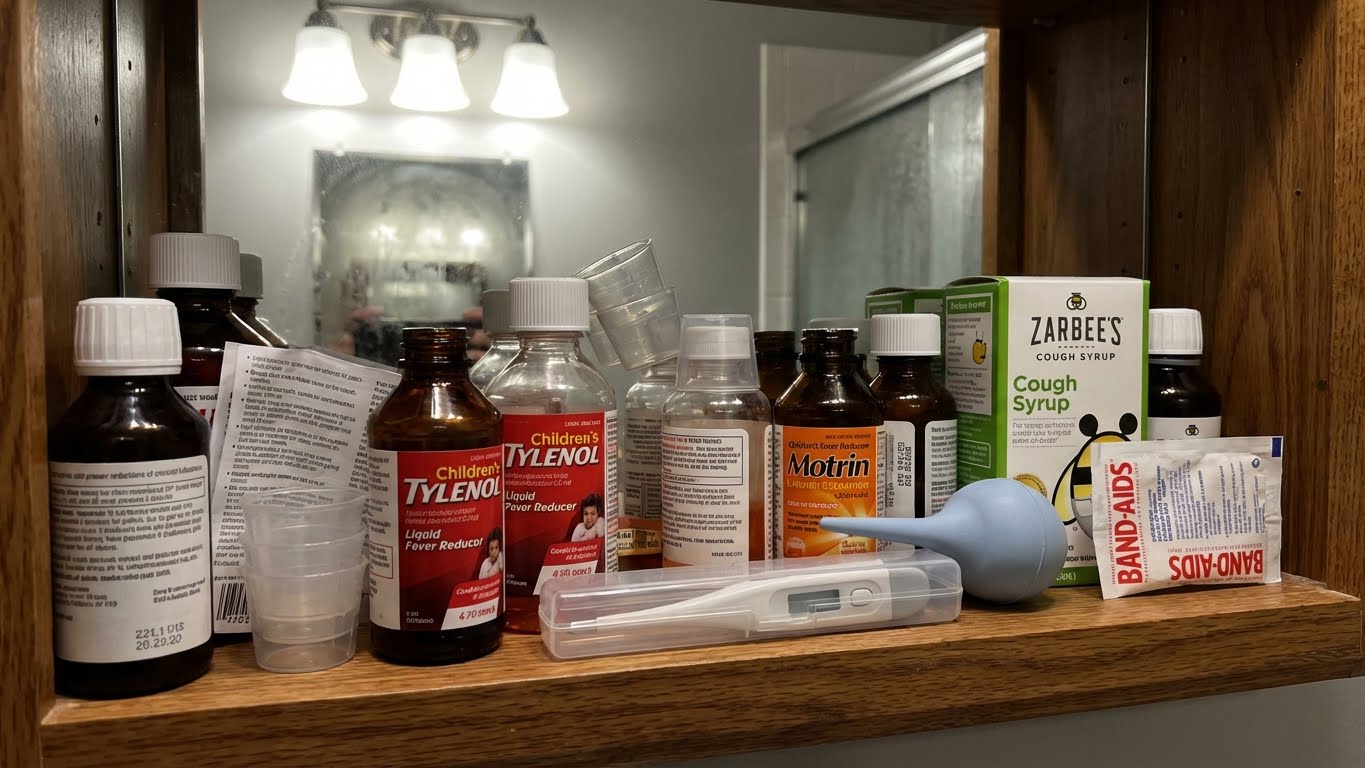
Essential items include infant/children's acetaminophen, infant/children's ibuprofen (for ages 6+ months), digital thermometer, saline nasal drops, nasal aspirator, petroleum jelly, bandages and gauze, antibiotic ointment, Pedialyte or electrolyte solution, and accurate measuring syringe or cup.
For medication safety, always use the dosing device that comes with medication, dose by weight not age, never use adult medications for children, check expiration dates regularly, store medications safely out of reach, never call medicine "candy," and keep poison control number handy: 1-800-222-1222.
When to Go to Emergency Room
Seek emergency care immediately for difficulty breathing or blue lips, unresponsiveness or difficulty waking, seizure lasting more than 5 minutes, severe allergic reaction, dehydration with no improvement, head injury with loss of consciousness, severe pain, or suspected poisoning.
Prevention
Keep up with vaccinations, practice frequent handwashing, avoid sick people when possible, maintain healthy diet and sleep, don't share cups or utensils, clean toys regularly, and get annual flu vaccines. While childhood illnesses are inevitable, most are minor and resolve with home care and time. Trust your instincts—you know your child best. When in doubt, call your pediatrician.