Baby-Proofing Your Home: Complete Safety Checklist
Your home is about to become your baby's playground and discovery zone. Baby-proofing creates a safe environment where your little explorer can develop independence and confidence. This guide walks you through every room, helping you identify and eliminate hazards before they become problems.
When to Start Baby-Proofing
Start before your baby becomes mobile—typically around 4-6 months. Babies develop quickly, and by the time you notice they're moving, they're already into everything. Before birth, handle major installations like gates and furniture anchoring. By 4-6 months, address lower-level hazards as baby begins rolling. From 6-9 months, tackle mid-level hazards as sitting and crawling begin. At 9-12 months, protect against higher-level hazards as pulling up and cruising start. After 12 months, address advanced hazards for climbing and reaching.
Essential Baby-Proofing Supplies
You'll need safety gates (both pressure-mounted and hardware-mounted), furniture anchoring straps, outlet covers or plates, cabinet and drawer locks, corner and edge bumpers, door knob covers, toilet locks, window guards or stops, cord shorteners, and stove knob covers. These basic items cover most safety needs in a typical home.
Room-by-Room Safety
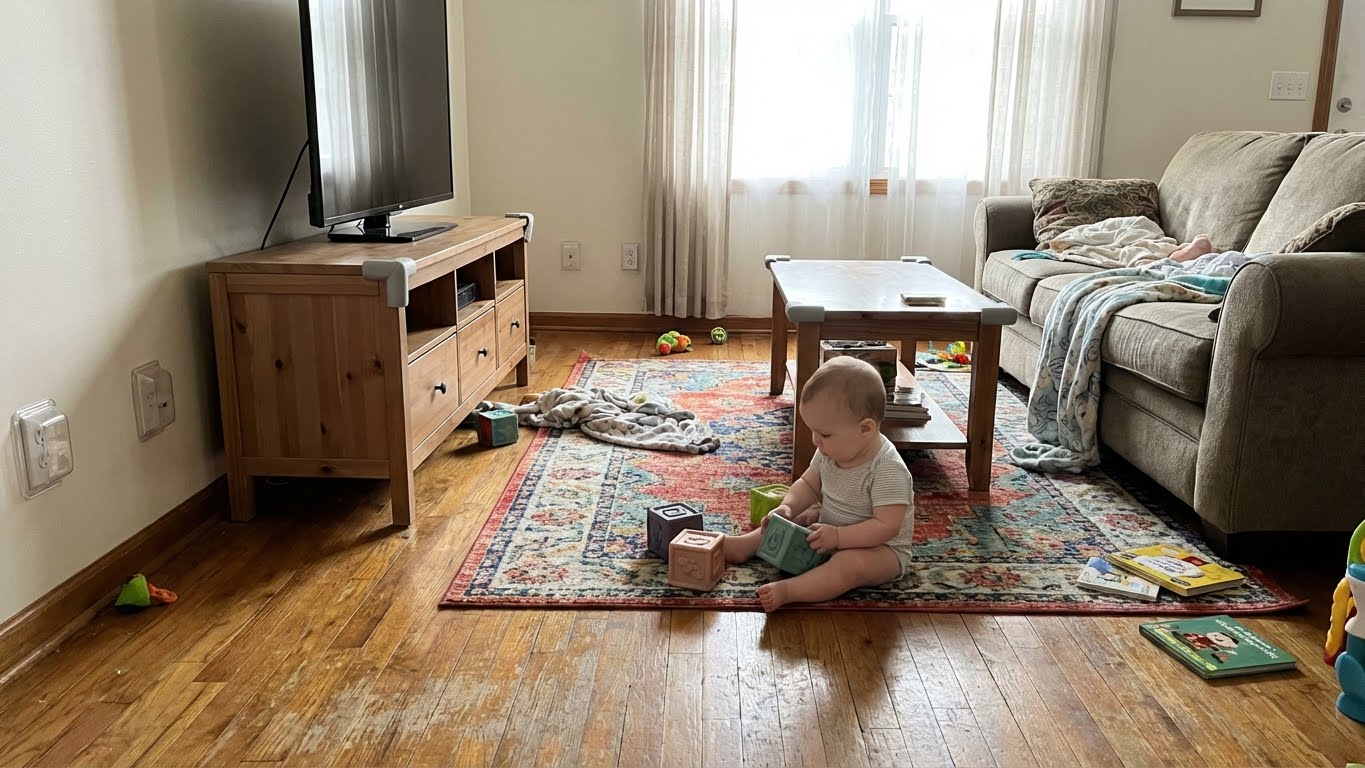
In the living room, anchor all heavy furniture to walls including TVs, bookshelves, and dressers. Remove or pad sharp corners on coffee tables, secure TVs on stands or mount them, remove tablecloths babies can pull, and move floor lamps away from traffic. Cover all outlets, hide electrical cords, keep chargers out of reach, and secure power strips behind furniture. Install window guards above the first floor, use cordless blinds or cut cord loops, move furniture away from windows, and keep windows locked when unsupervised.
The kitchen requires special attention. Lock cabinets containing chemicals and cleaners, lock drawers with knives and sharp objects, store heavy items on lower shelves, and designate one safe cabinet for baby to explore. Install stove knob covers, turn pot handles inward, unplug small appliances when not in use, keep hot drinks away from counter edges, and use back burners when possible. Install a safety gate to keep baby out while cooking, store plastic bags out of reach, and lock or make the garbage can inaccessible.

Bathroom safety is critical. Never leave baby alone in the bath, set water heaters to maximum 120°F, always test bath water temperature, install toilet locks, and keep the bathroom door closed with a baby gate. Lock the medicine cabinet, store all medications out of reach, keep cosmetics and razors secure, store cleaning products in high cabinets, and unplug hair dryers and straighteners.
In the nursery, ensure crib slats are no more than 2-3/8 inches apart with a firm, snugly-fitting mattress. Never use bumpers, blankets, pillows, or stuffed animals. Lower the mattress as baby grows, remove mobiles with strings once baby can pull up, and keep the crib away from windows, cords, and curtains. Always use the safety strap on changing tables, keep one hand on baby constantly, keep supplies within reach but away from baby, and never leave baby unattended. Anchor dressers to walls, keep small objects off the floor, secure window blind cords, install outlet covers, and remove hanging decorations.
For stairs and hallways, install hardware-mounted gates at the top of stairs, pressure-mounted or hardware gates at the bottom, ensure sturdy railings, remove or secure stair runners, and keep stairs clear of toys and clutter.
Specific Hazard Types
Remove choking hazards—anything smaller than a toilet paper roll. This includes coins, buttons, batteries, small toy parts, balloons (major choking risk), and plastic bags. For poisoning prevention, lock all medications, store cleaning products high, keep laundry pods locked away, remove or elevate toxic houseplants, store alcohol out of reach, and lock vitamins and supplements.
Eliminate strangulation hazards by removing or shortening window blind cords, keeping necklaces and scarves away from baby, ensuring no pacifier strings longer than 6 inches, securing electrical cords, and removing crib mobiles when baby can pull up. Prevent burns by lowering water heater temperature, keeping hot drinks away from edges, using back stove burners, testing bath water before placing baby in, keeping irons and curling irons unplugged and out of reach, and covering radiators or heating vents.
The Get Down Test
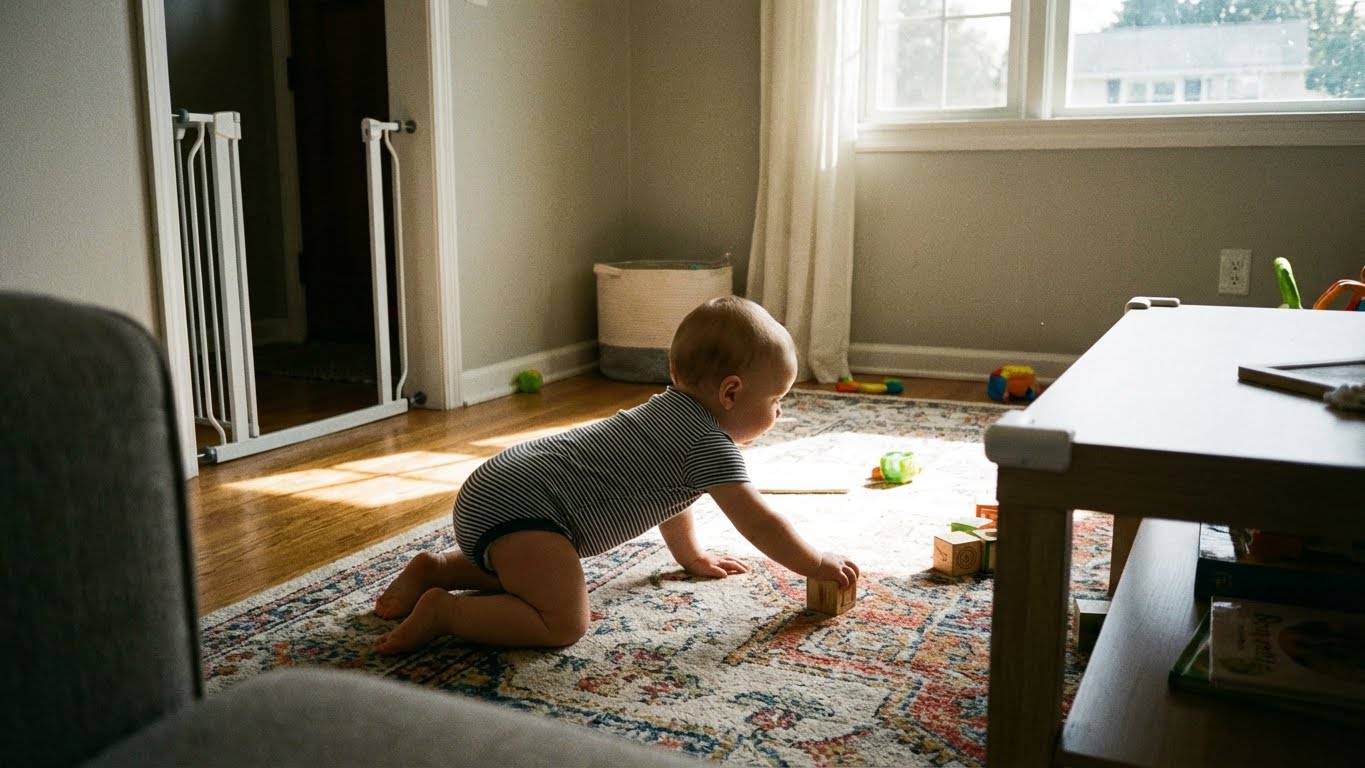
Crawl through each room at baby's level to spot hazards you'd miss from adult height. Ask yourself: What can baby reach? What can they pull? What looks interesting to explore? What small items are on the floor? Where could baby get stuck? This perspective reveals surprising dangers.
Emergency Preparedness
Keep poison control (1-800-222-1222), your pediatrician's number, and emergency numbers easily accessible. Maintain a fully-stocked first aid kit and working fire extinguisher. Learn infant CPR, choking first aid, basic first aid, and how to use a fire extinguisher. These skills could save your child's life.
Baby-proofing creates peace of mind and gives your baby freedom to explore safely. While you can't eliminate every risk, you can significantly reduce hazards. Start early, be thorough, and revisit your baby-proofing regularly as your child grows. Your effort creates a safe space for your baby to learn and develop with confidence.