Baby Milestones: Month-by-Month Development Guide
Watching your baby grow and develop is one of parenthood's greatest joys. Each milestone represents incredible progress in your child's physical, cognitive, social, and emotional development. This month-by-month guide helps you understand what to expect during your baby's first year. Remember: every baby develops at their own pace, and these are general guidelines, not rigid rules.
Months 1-3: The Foundation
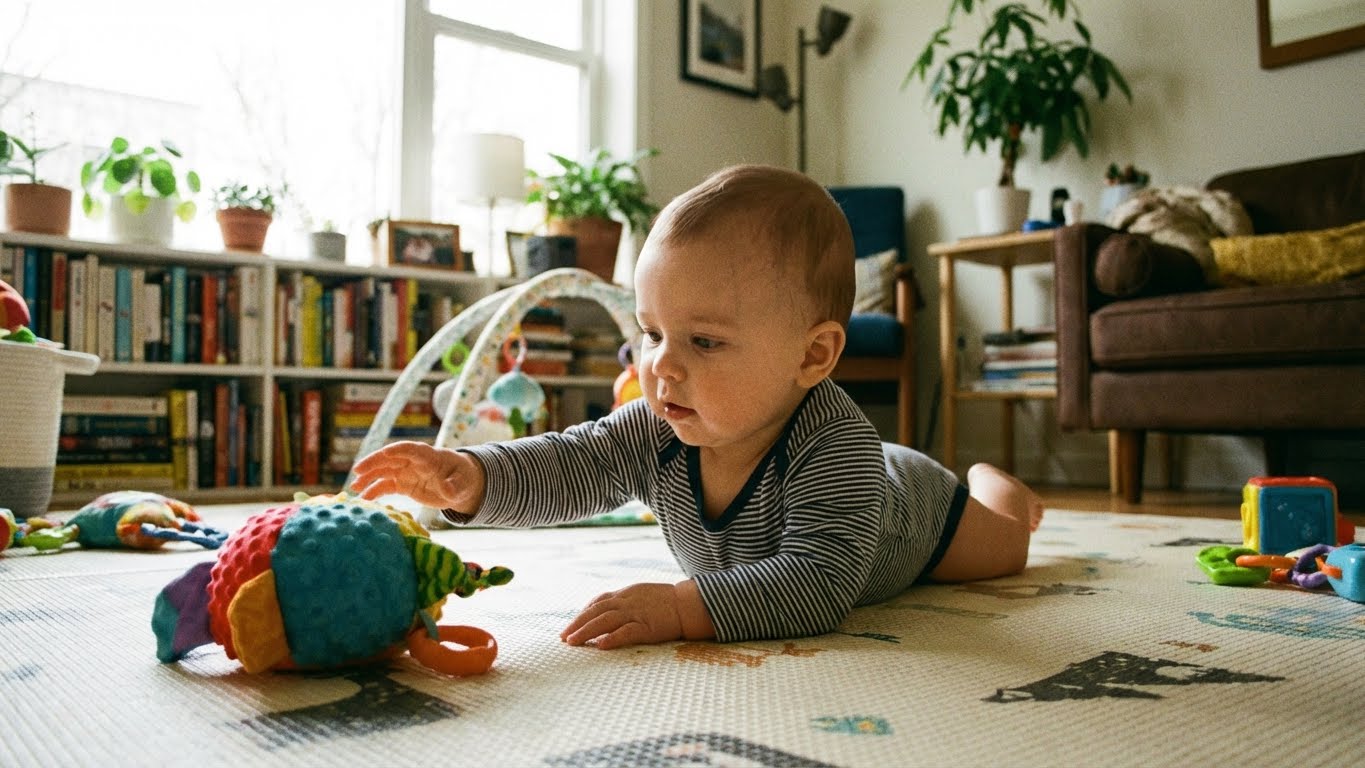
During the first month, your newborn has reflexive movements and can briefly lift their head during tummy time. They focus on faces 8-12 inches away and startle at sudden sounds. By month two, the magical social smile emerges! Your baby holds their head up longer, brings hands to mouth, and makes cooing sounds. Month three brings growing strength—they support their upper body during tummy time, stretch and kick legs vigorously, and begin reaching for dangling objects.
Cognitively, babies in these early months start recognizing familiar faces and voices, following moving objects with their eyes, and showing boredom if activities don't change. Emotionally, they begin smiling at people, imitating facial expressions, and enjoying playtime. Communication evolves from crying for needs to cooing, gurgling, and making different sounds to express various needs.
Months 4-6: Growing Independence
Month four is exciting as babies develop hand-eye coordination. They hold their head steady, push up on arms during tummy time, may roll from tummy to back, and importantly—reach for and grasp toys! By month five, rolling becomes easier in both directions, and babies sit with support while bouncing when held in standing position.
The six-month milestone is huge. Most babies can sit without support (at least briefly), roll in both directions, support weight on legs, and may begin scooting or crawling. They're bringing everything to their mouth, showing genuine curiosity, and passing toys from hand to hand. Socially, they recognize familiar faces, love looking in mirrors, and laugh out loud. Communication advances to responding to sounds, stringing vowels together, and taking turns "talking" with you.
Months 7-9: Mobility Begins
Month seven brings steady independent sitting and the beginnings of mobility—many babies start crawling or scooting. They transfer objects between hands and get into sitting position independently. By month eight, babies may stand while holding on and explore their world more actively. They look for dropped objects, bang objects together, and poke with their index finger.
Month nine is when exploration really takes off. Babies stand holding on, may cruise along furniture, and some even stand alone briefly. They play peek-a-boo, put objects into containers, and watch the path of falling objects. Stranger anxiety often emerges during these months as babies develop strong preferences for familiar caregivers. They may show fear in some situations and have favorite toys.
Months 10-12: Walking and Talking
Month ten showcases personality development. Babies pull to stand, cruise along furniture, and may stand alone briefly. The pincer grasp emerges, allowing them to pick up small objects with thumb and finger. They explore objects thoroughly, find hidden objects easily, and show clear preferences for people and toys.
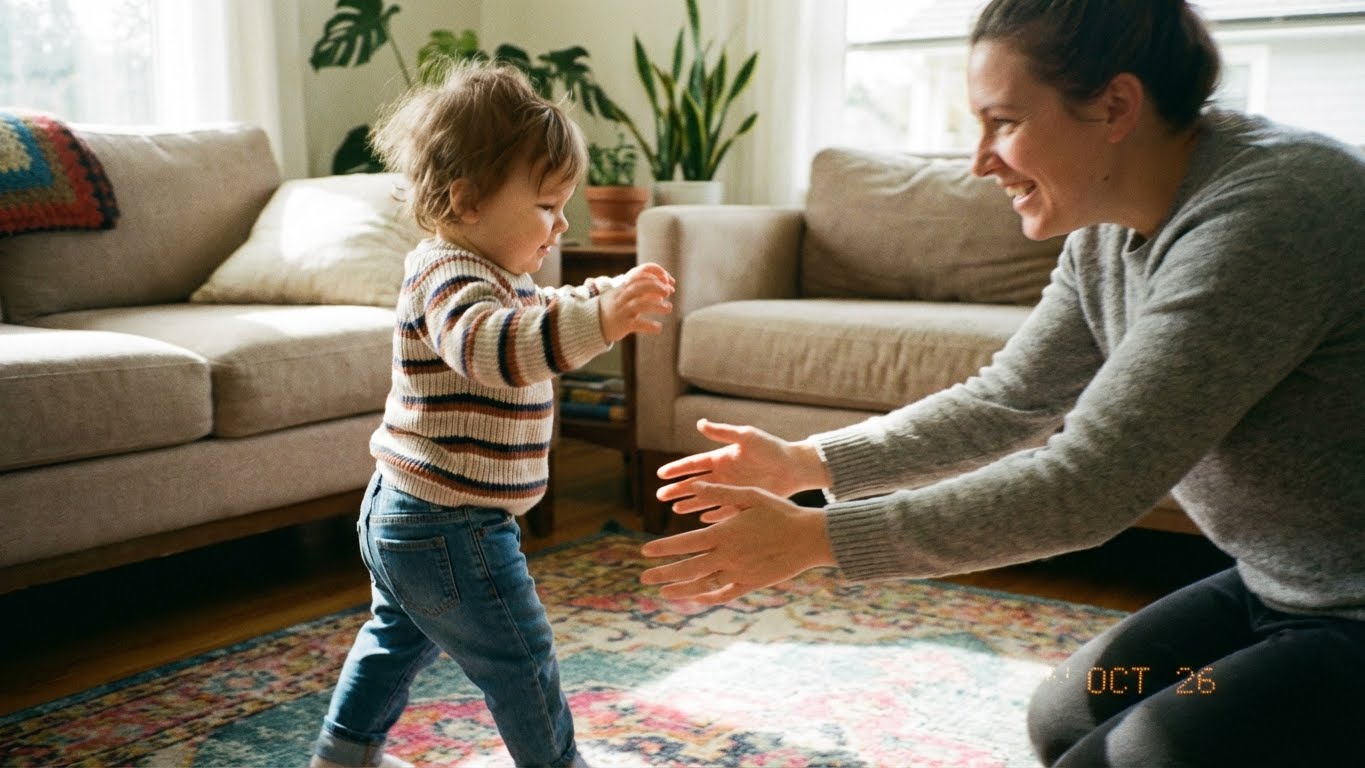
By month eleven, standing independently becomes easier, and babies take steps while holding hands. Many babies take their first independent steps. They clap hands, stoop to pick up objects, and say several words besides "mama" and "dada." Month twelve—the first birthday! Many babies walk independently or are very close. They stand alone well, drink from cups, pick up small objects precisely, and use objects correctly like brushes and phones.
Communication blooms with 1-2 words besides "mama" and "dada," responding to simple requests, using gestures consistently, and trying to imitate words. Emotionally, they hand you books to read, show independence, and display preferences clearly.
When to Call Your Pediatrician
By 3 months, call if baby doesn't respond to loud sounds, doesn't watch moving things, doesn't smile at people, can't bring hands to mouth, or can't support head well. By 6 months, contact your doctor if baby doesn't try reaching for things, shows no affection, doesn't respond to sounds, has difficulty getting things to mouth, doesn't make vowel sounds, doesn't roll over, or can't sit with help.
By 12 months, call if baby doesn't crawl, can't stand with support, doesn't search for hidden objects, doesn't say single words, doesn't use gestures, doesn't point, or loses previously acquired skills. Trust your instincts—you know your baby best. When in doubt, call your pediatrician.
Supporting Development
Support your baby's development through daily tummy time starting from day one. Talk and read constantly—narrate your day, read books, and sing songs. Provide age-appropriate toys and interactive games, and create a safe environment for exploration. Practice responsive parenting by answering cries, smiles, and communication attempts promptly. Limit screen time to video chatting only before 18 months.
Every baby develops at their own pace. Some walk at 9 months, others at 15 months—both are normal. Focus on your baby's individual progress rather than comparing to others. Most importantly, enjoy this incredible first year. Your baby will never be this little again. Celebrate each milestone and savor the journey!